
Turning kitchen scraps into soil at Avenal State Prison
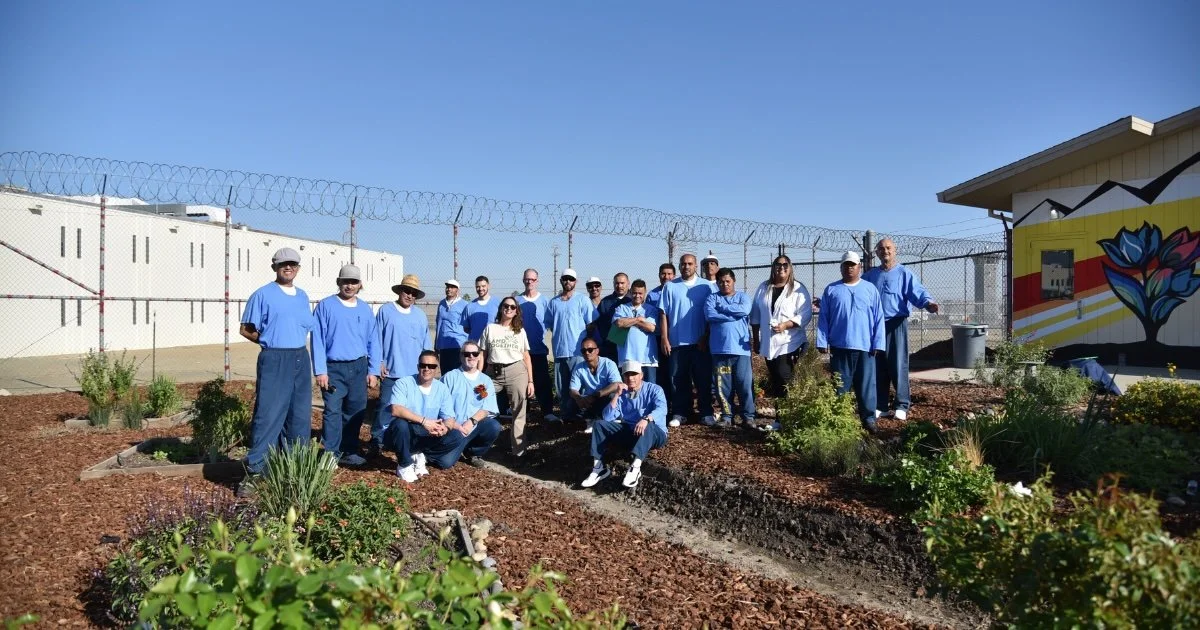
Composting is one of the ways Land Together practices regenerative agriculture, and we currently run composting programs at eight California prisons. At Avenal State Prison, participants on two yards run active three-bin compost systems. They collect food scraps for the bins and weigh each week's haul on a luggage scale. In an average week, the two yards take in close to 400 pounds of kitchen scraps. The finished compost goes back into the garden beds, where it helps grow the food participants harvest.
Valley fever, a sometimes fatal illness caused by breathing in fungal spores from disturbed soil, has hit Avenal especially hard. Between 2006 and 2013, Avenal and neighboring Pleasant Valley State Prison were the center of California's prison valley fever outbreak, and the disease killed dozens of people held there. Cases statewide reached a record high in 2024 and are still rising.
Soil that holds moisture and stays covered releases less of that dust, and it's the kind of soil participants are building in their gardens. Over the next few years, we aim to double composting capacity at Avenal and bring those methods to more of the yard. Through composting and other regenerative agriculture techniques, participants are learning to care for their own health and the health of the land, and they bring those skills home to their communities.